
IRM Smart Schools
In response to this pressing challenge, IRM developed the SMART Schools Program, a community-driven model that brings out-of-school children from vulnerable families back into classrooms through low-cost, high-impact interventions. The philosophy underlying SMART Schools is simple yet powerful: education is not just about literacy, it is the foundation for social protection, empowerment, and human dignity.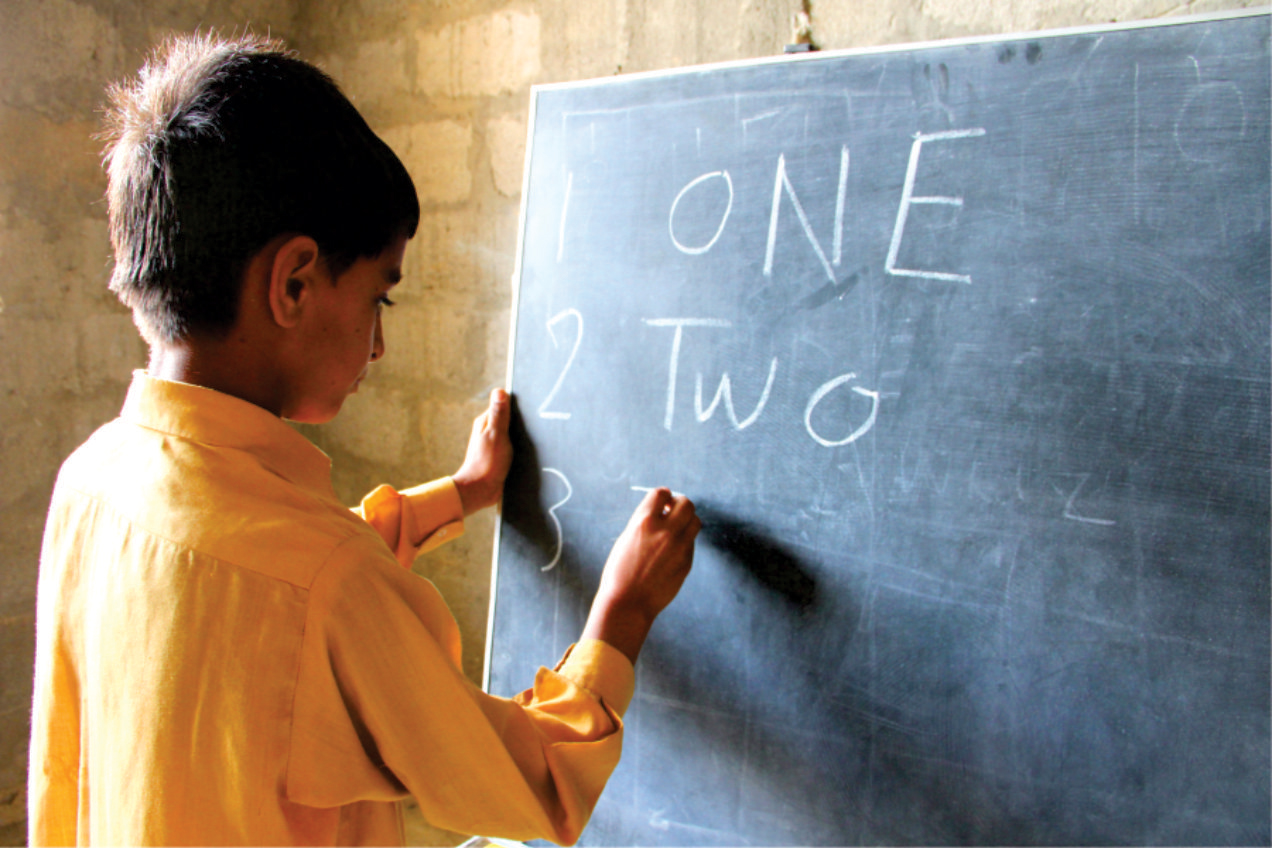
SMART Schools are typically one-room, multi-grade institutions established within semi-urban or rural communities. In most cases, a local educated woman converts a room in her home into a classroom, or the community donates space and utilities, such as in brick kiln settlements where owners provide facilities for children of laborers. This approach not only minimizes infrastructure costs but also ensures accessibility and community ownership. By employing local women as teachers, the program creates economic opportunities while also building trust among parents, particularly in communities hesitant to send their daughters to co-educational or male-led schools.
The curriculum is based on the government-approved primary syllabus for Grades 1–5, supplemented with materials that emphasize ethical values, social behavior, and life skills. Teachers receive specialized training in multi-grade teaching methodologies, enabling them to manage diverse classrooms effectively. At the end of primary education, students are mainstreamed into regular government schools or directed toward IRM’s vocational training programs, depending on their age, aptitude, and circumstances. This dual pathway ensures that education does not end at the primary level but becomes a stepping stone either toward higher learning or sustainable livelihoods.
Situational Perspective
Pakistan is facing an education crisis of unprecedented scale. An estimated 25.4 million children are out of school at the primary level, a figure that places Pakistan among the countries with the highest number of out-of-school children globally. Equally concerning is the dropout rate: only a quarter of children who enter Grade 1 manage to complete their secondary education. The reasons for this crisis are numerous and interconnected. Household poverty compels many families to push their children into child labor, while geographic isolation and inadequate school infrastructure further restrict access, especially for girls. Teacher absenteeism, negative attitudes, and the lack of safe, child-friendly learning environments often discourage families from sustaining children’s enrollment. These challenges are compounded by limited political will and a weak public education system, leaving millions of children excluded from their fundamental right to education.
Achievements and Impact
Since its inception, the SMART Schools Program has demonstrated remarkable results. IRM has successfully established 117 schools across Punjab, Sindh, Khyber Pakhtunkhwa, and Islamabad, enrolling over 4,200 out-of-school children, with girls making up 53 percent of the student body. Importantly, all 117 female teachers employed under the program are women, reflecting IRM’s strong commitment to female empowerment.
The program has also directly contributed to the reduction of child labor. In brick kiln communities and slum settlements of Lahore, children who were previously engaged in waste picking or bonded labor have now been withdrawn from exploitative environments and enrolled in classrooms. More than 400 such children are currently receiving an education through SMART Schools. IRM established a school in Lahore’s red-light district, enrolling 28 children of sex workers and musician families—a community that has long been excluded from educational opportunities.
Beyond access, the program emphasizes quality. Teachers are trained not only in academic instruction but also in creating safe, inclusive, and motivating classrooms. Technology is integrated at a basic level through tablets and pico projectors, which are used for phonics, storytelling, and interactive lessons. To complement academic learning, IRM has developed a “Social and Ethical Behavior” booklet, designed to instill moral values through stories and fun-based activities. The program also addresses student well-being through biannual medical check-ups, ensuring early detection of health issues that might hinder learning.
Over the last five years, the program has succeeded in mainstreaming 800 graduates into regular government secondary schools, proving that the model does not merely provide temporary relief but creates genuine educational pathways.
Cost-Effectiveness and Sustainability
One of the defining strengths of the SMART Schools model is its affordability. A school can be operated at an annual cost of PKR 250,000 per school/per year while the per-student cost is approximately PKR 8,000 per year. This makes it one of the most cost-effective models for delivering primary education in marginalized areas. Sustainability is further reinforced by modest contributions from families who can afford a nominal fee of Rs. 80 per month, though children from extremely poor households are fully exempted. Teachers receive stipends from IRM, ensuring their livelihoods are supported, while at the same time fostering ownership and responsibility within the communities they serve.
Monitoring, Accountability, and Transparency
To maintain quality and transparency, IRM has established a robust monitoring and information system. Supervisors conduct daily school visits, and data on teachers, students, and school performance is recorded through a digital MIS platform. The MIS includes detailed profiles with photographs, attendance records, health updates, and progress reports for each child. Regular assessments are conducted to evaluate learning outcomes, while feedback is collected from Parent Education Committees formed within each community.
Donors and stakeholders are provided with monthly monitoring reports, quarterly activity summaries, and annual progress updates. Case studies of individual success stories are also shared to highlight the transformative impact of the program. This emphasis on accountability ensures that every rupee invested directly benefits the intended children.
Conclusion and Call for Support
The IRM SMART Schools Program demonstrates that education for the most vulnerable is possible, affordable, and transformative. By combining community mobilization, female empowerment, and innovative teaching strategies, the model creates safe learning spaces for children who would otherwise remain excluded. More importantly, it does not stop at primary education—it creates pathways for higher learning, vocational training, and dignified livelihoods.
Yet, the challenge is enormous. With millions of children still out of school, the need for scalable and sustainable solutions has never been greater. Expanding SMART Schools across Pakistan requires support from government, development partners, and philanthropists committed to breaking the cycle of poverty through education. Each school established represents a community uplifted, each child enrolled represents a future reclaimed.
The vision is clear: to transform education from a privilege of the few into a right enjoyed by all. Through the SMART Schools Program, IRM is building the foundation for a more equitable and prosperous Pakistan—one classroom at a time.
Education is not just a tool for learning—it is a form of social protection. Recognizing that underprivileged families and children face multiple insecurities, IRM has developed an innovative model of Smart Schools to cater to children who are out of school due to poverty, marginalization, or social exclusion.
Contact Information:
Email: iram@irm.edu.pk
Address: IRM Complex, #7, Sunrise Avenue, Park Road, Near COMSATS University, Islamabad, Pakistan.