


For the past three years, my mornings looked almost the same. I’d wake up around 9 am, get ready, and head to my university. With Empire of the Sun – Walking on a Dream playing on repeat through my headphones, I’d make my way to lecture halls where professors discussed topics like women’s rights, sustainable development, and poverty alleviation.
Every time, I’d sit there wondering to myself: What good does this do for me—or for anyone, for that matter?
This perspective stayed with me until one day, everything changed. While passing by the university bulletin board, I noticed a poster that read: “Summer Internship Program – Scan the QR Code Now!” Out of curiosity, I scanned it right away. That simple decision turned into one of the best choices I’ve ever made. A few days later, I received an email confirming my selection—and that’s how my journey with IRM began.
Stepping into Reality at IRM
Joining IRM felt like stepping out of a computer simulation into the real world. It was as if I had been living in a bubble all along. Suddenly, the theories I had studied in lecture halls found a space to come alive.
At IRM, I saw how capacity building really works. I witnessed the process of vocational training, the effort that goes into designing interventions, and the challenges of securing funds for those initiatives. No classroom lecture could have prepared me for the depth of learning I experienced here.
Lessons Beyond the Classroom
IRM didn’t just teach me what to do—it guided me on how to do it. My role wasn’t limited to proofreading proposals and documents; I was actively involved in developing them. I brainstormed with my supervisor, exchanged ideas, and explored ways to create meaningful impact for those who needed it most.
This experience taught me that policies, frameworks, and interventions are not the essence of development. They are merely the skeleton. The true essence lies in human intellect, empathy, and trust—the values that shape real change.
Bridging Theory and Practice
As I move forward in my career, I carry both ends of the spectrum with me: the academic foundation built during my university years, and the practical experience gained at IRM.
Academia taught me critical thinking, structured problem-solving, and analytical skills. But without a platform like IRM, those skills would have remained unused. In lecture halls, theories remain frozen, and case studies stay controlled. In the field, however, situations are dynamic, demanding creativity and out-of-the-box thinking.
This blend of theory and practice has not only strengthened my professional skills but also given me a clear sense of purpose—finally answering the question I asked myself three years ago.
And for that, I am truly grateful to IRM.
Author:
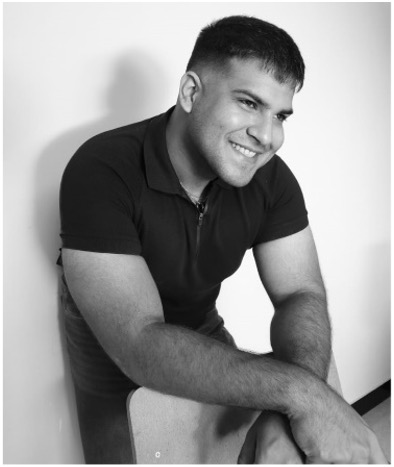 Amir Affan Khan
Intern – Institute of Rural Management (IRM)
Bahria University
Aspiring Practitioner – Gender, Climate and Policy Implementation