

Capacity Building for Community Resilience in Disaster Risk Management and Climate Action (PPAF Funded Project)
Capacity Building for Community Resilience in Disaster Risk Management and Climate Action project, implemented by the Institute of Rural Management (IRM) under the Pakistan Poverty Alleviation Fund’s Restoring Social Services and Climate Resilience (RSS&CR) initiative, is a critical response to Pakistan’s acute climate vulnerabilities, highlighted by the catastrophic 2022 floods. Spanning 61 flood-affected union councils across 19 districts in Balochistan, Punjab, Sindh, Khyber Pakhtunkhwa, and Gilgit-Baltistan, this initiative empowers communities to address climate-induced challenges, including floods, droughts, and landslides, which threaten livelihoods and infrastructure. By equipping local leaders, government officials, and stakeholders with practical tools for disaster risk management (DRM) and climate adaptation, IRM fosters sustainable, community-led resilience, aligning with its mission to promote inclusive development and socio-economic stability in Pakistan’s most vulnerable regions.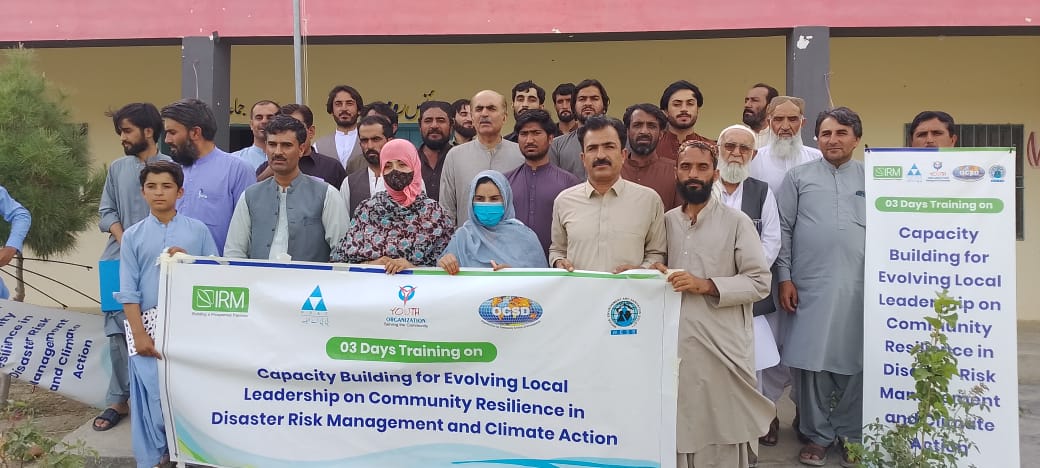
IRM’s multifaceted approach includes three-day training workshops for over 570 participants, including local leaders, government officials, and staff from PPAF’s partner organizations. These workshops, tailored through digital needs assessments to address region-specific challenges—such as flood management in Sindh or drought mitigation in Gilgit-Baltistan—deliver practical skills in community-based disaster risk reduction, climate adaptation strategies, and emergency response protocols. Using interactive methods like case studies, simulations, group discussions, and role-playing, the training ensures actionable learning that participants can apply in their communities. The curriculum is designed to be participatory, fostering hands-on skills to anticipate, mitigate, and respond to climate-related disasters, thereby strengthening local capacity for proactive risk management.
Complementing the workshops, IRM organizes one-day awareness campaigns engaging approximately 7,000 stakeholders, including civil society representatives, religious leaders, local influencers, and community volunteers. These sessions promote knowledge-sharing, build community networks, and foster a collective commitment to resilience. By prioritizing inclusivity, the campaigns ensure that marginalized groups, such as women and minority communities, are actively involved, amplifying their voices in resilience-building efforts. The sessions serve as platforms for disseminating best practices, encouraging dialogue, and fostering collaboration, creating a unified approach to disaster preparedness and climate action tailored to each region’s ecological and cultural context.
Strategic partnerships with PPAF’s partner organizations are central to the project’s success. IRM facilitates seamless coordination through regular meetings, progress reviews, and feedback mechanisms, ensuring alignment with project objectives and operational efficiency. These partnerships leverage local expertise and resources, integrating gender-inclusive practices to promote equitable participation across all activities. By addressing logistical complexities, cultural sensitivities, and varying levels of local capacity, IRM ensures community buy-in and smooth execution, making interventions agile and responsive to emerging challenges.
The project’s impact is transformative, training over 570 local leaders and engaging 1,900 stakeholders to build a robust foundation for sustainable resilience. By equipping communities with tools to anticipate and respond to climate-related disasters, the initiative enhances socio-economic stability and environmental sustainability. The emphasis on gender inclusivity empowers women and marginalized groups to contribute to and benefit from resilience efforts, promoting equitable development. Strengthened local institutions and collaborative networks foster a culture of preparedness, enabling communities to navigate Pakistan’s unpredictable climate landscape. Aligned with the RSS&CR framework, the project amplifies systemic efforts to restore social services and enhance adaptive capacity, laying the groundwork for long-term stability in vulnerable regions.
IRM’s commitment to adaptive learning and stakeholder engagement ensures the project’s sustainability and relevance. By addressing challenges like logistical barriers and cultural sensitivities through localized content and digital tools, IRM delivers impactful interventions that resonate with diverse communities. This initiative not only builds resilience but also fosters a sense of ownership among participants, empowering them to drive community-led climate action. Through this project, IRM is paving the way for a resilient Pakistan, where communities are equipped to face environmental challenges and build a sustainable, inclusive future.
Contact Information:
Email: shehzad@irm.edu.pk
Address: IRM Complex, #7, Sunrise Avenue, Park Road, Near COMSATS University, Islamabad, Pakistan.
Contact number: +92 51 8742201-3