




Big Fish in New Waters
Before joining IRM for my summer internship, I carried a quiet confidence with me. After all, I was a university student—six semesters into my Public Administration degree at Quaid-e-Azam University—armed with years of assignments, group projects, and polished presentations. In my little academic pond, I was the big fish.
But the first week at IRM quickly burst that bubble. This wasn’t the sheltered space of classroom theories anymore; this was the ocean. Here, deadlines weren’t hypothetical—they were real. Expectations weren’t flexible—they were high. And the work wasn’t about pleasing a professor; it was about creating something that could directly impact people’s lives and communities.
That’s when I began to see the difference: academic success is about preparing for tomorrow, but the professional world is about delivering today. At IRM, I learned that it’s not about knowing everything in advance—it’s about being willing to act, learn, and adapt.
When I first heard the phrase “No Harkat, No Barkat” during a session, I smiled politely, thinking it was just another motivational one-liner. But three weeks into my internship, I’ve realized it’s far more than that. It’s about stepping out of comfort zones, taking risks, and learning that effort creates reward and movement creates progress.
Week One: Learning the Landscape
The first week felt like receiving a welcome kit—except instead of snacks and stationery, it was filled with inspiration, opportunities, and a schedule that kept me on my toes.
We kicked things off by learning about the Institute of Rural Management (IRM), its pioneer Mr. Shoaib Sultan Khan, and its mission to empower marginalized communities across Pakistan. We watched documentaries about Smart Schools, joined interactive talks, and visited vocational training centers where young people were learning skills free of cost.
One highlight was visiting two of IRM’s ongoing programs: a two-month electrical and mechanical training for boys, and a computer literacy course for girls. Watching these classes made me realize the scale of impact—these weren’t just lessons, they were lifelines to better futures.
We also had an inspiring session with Dr. Roomi S. Hayat, the CEO of IRM (see profile). His words were filled with passion and vision, reminding us that leadership is built on perseverance and the courage to challenge limitations. Listening to him, I realized this internship wasn’t just a learning opportunity—it was a chance to be part of a bigger mission. But Week 1 wasn’t all serious. Our supervisors introduced us to IRM’s gym and sports room, and soon we had an unofficial “sports time” from 3:45 to 4:30 pm every day. My table tennis skills were nonexistent, but the laughter, missed shots, and friendly competitiveness became part of our daily routine.
Looking back, Week 1 was the warm-up round—full of learning, observing, and testing the waters. Little did I know, the weeks ahead would challenge me to think bigger, work harder, and have even more fun.
Week Two: Turning Ideas into Harkat
If Week 1 was about settling in, Week 2 was pressure-cooker mode. My fellow intern, Rohma, and I spent most of it inside our proposal.
Our first idea, a skincare brand and scented candles project for girls aged 15–18was rejected by Madam Nausheen. But instead of quitting, we revised, refined, and reframed until Mehek-e-Hunar was born: a four-month program for women who survived acid attacks and were living in Darul-Aman, Multan. The plan focused on herbal product training, confidence-building, and a Skincare Showcase Day to connect survivors with buyers. For the first time, it felt meaningful and solid.
Parallel to this, our research took shape under Mr. Aasim Reza’s guidance. He finalized our topic: “The Impact of Kamyab Jawan Program on Start-up Creation Among University Students.” That single line transformed hallway conversations into a real research roadmap.
We also attended an HR session with Madam Samia Imran, who shared insights on interviews, career goals, and navigating workplace politics. Later, Mr. Khaleel Ahmed emphasized that research isn’t just data collection—it’s a living process that responds to social needs. His mantra stuck with me: No harkat, no barkat. No effort, no reward.
And of course, there was sports time. By Week 2, our supervisor Mr. Shehzad joined us at the table tennis and snooker tables. I lost countless matches, but each game became a reminder that learning happens both at a desk and in the sports room.
Week Three: Creativity, Content, and a Close Call
Week 3 was a mix of creative highs and lighthearted chaos. We were assigned two reels—one by Madam Nausheen and one by Mr. Shehzad.
For Madam’s reel, I came up with the theme and title: “A Day in the Life of an Intern at IRM.” For the second, we recreated a quirky Instagram reel that showcased our Social Protection interns with fun nicknames like “Pookie,” “Sassy,” and “Lowkey Chill.” Directing, editing, and filming alongside my peers was both challenging and hilarious—and even our supervisor joined in.
One heart-racing moment came when I was showing my marketing guidelines to Ma’am Nausheen. She noticed a music playlist tab open on my screen and asked about my songs. For a few minutes, I silently panicked, praying nothing too embarrassing would pop up. Thankfully, she just smiled and moved on.
And then there was sports time again—where I lost yet another round of table tennis to Sir Shehzad, who somehow always won but still encouraged us. By now, losing had become part of the fun—and the learning.
The True Meaning of No Harkat, No Barkat
One Saturday evening, scrolling through my phone, I asked myself: What have I really learned in these three weeks?
Sure, I picked up project planning, proposal writing, and procurement research. But the deeper lessons weren’t just about tasks—they were about me.
Before IRM, I thought I was a “big fish”—confident and capable. But stepping into this internship has been like diving into an ocean: humbling, challenging, yet full of possibility. I’ve learned that growth comes from showing up even when you’re unsure, laughing at mistakes, balancing creativity with structure, and pushing yourself forward—again and again.
“No harkat, no barkat” isn’t just a catchy phrase anymore. It’s a mindset. If you don’t move, you don’t grow. If you don’t try, you don’t learn. If you stay in your bubble, you never realize how big your potential really is.
Looking Ahead
Three weeks in, I’ve realized that progress isn’t about having all the answers—it’s about movement, adaptability, and the courage to keep showing up. Whether it’s rewriting a proposal, directing a reel, or losing yet another table tennis match, every step forward is a win.
I’ve grown from a student living in the bubble of academic certainty to someone who understands that the real world runs on teamwork, resilience, and action.
And the best part? This is only the halfway mark. The waters ahead are still wide open. Stay tuned for the next part of my journey.
Author:
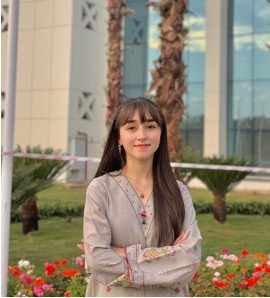 Eman Jehangir
Intern – Institute of Rural Management (IRM)
Quaid-e-Azam University
BS Public Administration